


Establishing professional digital communication standards requires a three-part framework: clear channel protocols, response-time expectations, and documentation practices that protect both individuals and the organization. Most workplace communication breakdowns stem not from technology failures but from undefined norms around when to email versus message, how quickly teams should respond, and what level of formality each platform demands.
Canadian organizations that implemented structured digital communication policies in 2025 reported 34% fewer internal miscommunications and measurably improved project completion rates. The …
Category: Uncategorized

Workplace etiquette is the set of professional behavioral standards and unwritten rules that govern how employees interact, communicate, and conduct themselves in business settings. These standards encompass everything from communication protocols and meeting conduct to office courtesy and digital professionalism, forming the foundation of respectful and productive work environments.
Understanding workplace etiquette matters more than many IT managers and business leaders initially recognize. While technical skills drive innovation and business acumen shapes strategy, professional conduct determines how effectively teams collaborate…

Business continuity is the strategic priority for most organizations in 2026, while disaster recovery serves as a critical subset within that broader framework. The deciding factor comes down to scope: business continuity encompasses people, processes, technology, and supply chains to keep operations running during any disruption, whereas disaster recovery focuses narrowly on restoring IT systems and data after a catastrophic event. For IT managers and executives evaluating these strategies, the distinction matters because downtime costs Canadian businesses an average of $9,000 per minute according to recent industry analysis, making the …
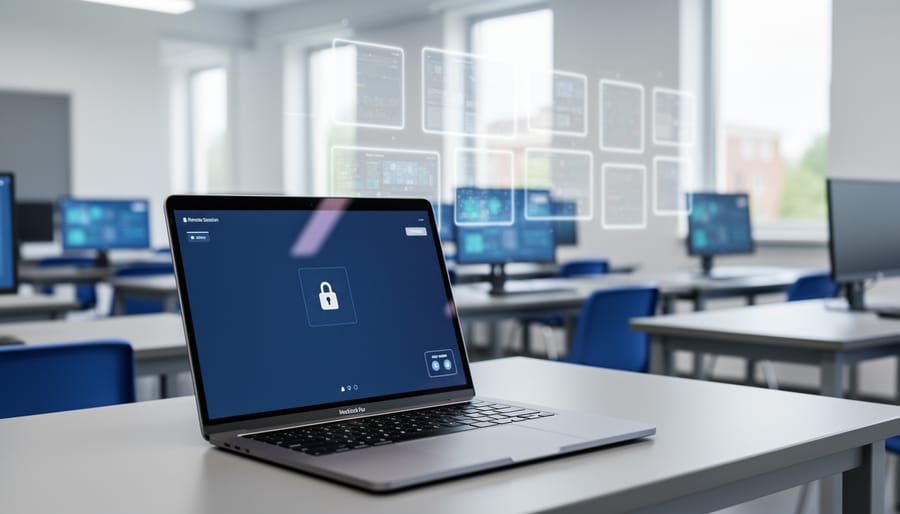
Educational institutions face an increasingly complex challenge: providing secure, efficient access to computing resources across campuses, remote learning environments, and hybrid workspaces. PC remote programs have transformed from a convenience into a critical infrastructure component, enabling everything from distance education delivery to centralized IT management across multiple facilities.
The technology landscape in 2026 offers educational decision-makers an unprecedented array of remote desktop solutions, each with distinct capabilities suited to different institutional needs. Small colleges managing a single computer lab …